 Tariffs remain a major part of U.S. economic policy in 2026, generating government revenue while changing the prices and incentives facing importers, businesses and households. The central question is deceptively simple: who ultimately pays?
The answer depends on what “pay” means. The business importing a tariffed product is generally responsible for the duty at the border. The wider economic cost, however, can move through supply chains and eventually be divided among importers, foreign suppliers, U.S. businesses and consumers.
Who Sends the Tariff Payment to the Government?
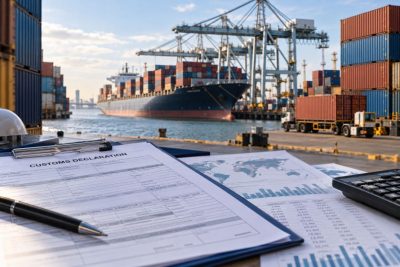
A tariff is a tax charged on imported goods. U.S. Customs and Border Protection states that the importer of record is responsible for correctly entering and classifying merchandise so that applicable duties can be assessed.
This is an important distinction. A foreign government does not simply write the U.S. Treasury a check equal to the tariff. The payment enters the American customs system through businesses importing goods into the United States.
The government therefore receives revenue. Yet the importer must decide what to do with the additional expense.
Where Does the Cost Go Next?
An importer has several choices. It can absorb some of the cost through lower profit margins, negotiate lower prices from overseas suppliers, switch suppliers or raise the price charged to customers.
Real-world outcomes often involve a combination of these responses.
Research published by the Federal Reserve Board in April 2026 found that tariff increases implemented during 2025 produced statistically significant price increases in more exposed consumer goods. Its estimates suggested those tariff changes had raised core goods PCE prices by 3.1 percent through February 2026 and core PCE prices overall by about 0.8 percent.
A separate 2026 Federal Reserve study using household transaction data found that tariffs raised retail prices while households reduced purchases of affected products. It also found a disproportionate welfare burden on lower-income households.
Why Don’t Businesses Simply Absorb the Tariffs?
Some do, at least temporarily. But margins have limits. A company facing higher costs across hundreds of products may eventually need to raise prices, find cheaper suppliers or reduce other expenses.
The effects can also travel beyond finished imports. A tariff on an intermediate product, such as a component used by a U.S. manufacturer, can increase production costs for goods assembled domestically.
The Federal Reserve reported in its July 2026 Monetary Policy Report that categories with greater tariff exposure experienced stronger price increases relative to their earlier trends during the previous year. The report also stressed that the exact effects depend on how consumers, importers, businesses and foreign exporters respond.
Are Tariffs an Effective Way to Raise Revenue?
They can raise substantial government revenue. The Budget Lab at Yale estimated in August 2026 that tariffs then in force could generate roughly $1.9 trillion over ten years under current law, before accounting fully for their effects on economic growth. Its analysis also estimated an eventual consumer price effect of about 0.7 percent from current tariff policy.
But revenue is only one part of the calculation. Tariffs can encourage domestic production, alter supply chains and provide leverage in trade negotiations. They can also increase input costs, invite retaliation and raise prices.
That is why saying tariffs “make foreign countries pay” or “are entirely paid by consumers” can both oversimplify the economics. The importer pays the duty directly. The eventual burden depends on how companies, suppliers and households adjust.
For policymakers, the trade-off is clear. Tariffs can produce federal revenue and pursue strategic trade goals, but that revenue does not arrive without economic consequences. Understanding who absorbs those consequences is essential when judging tariffs as both a tax and a trade-policy tool.