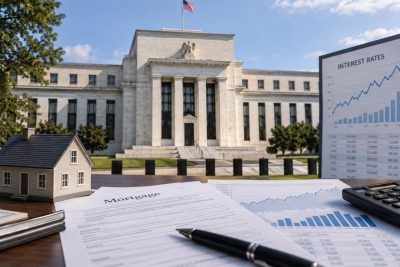
 High interest rates create costs that households and businesses can see immediately. Mortgages become more expensive. Companies face higher financing costs. Governments pay more to borrow. That makes monetary policy a political issue even when the institution setting rates is designed to operate independently.
The tension is straightforward. Interest-rate decisions affect millions of people, yet elected officials do not directly control each Federal Reserve decision. That arrangement can become harder to explain when voters are frustrated with borrowing costs.
Why Should Elected Leaders Have a Say?
One argument starts with democratic accountability. Monetary policy can influence employment, economic growth, borrowing and asset prices. Those are major economic outcomes, so it is reasonable for the public and elected representatives to scrutinize how the central bank operates.
The Federal Reserve is not completely separated from democratic institutions. Congress created it and established its statutory objectives. The president nominates members of its Board of Governors, and the Senate considers those nominations.
The Federal Reserve also reports to Congress. Its chair testifies before lawmakers, while the Board submits a Monetary Policy Report twice each year. Minutes from FOMC meetings are also released publicly.
Independence, therefore, does not mean an absence of accountability. It primarily means operational freedom to make monetary policy decisions within goals established by law.
What Changes When Politics Reaches the Rate-Setting Process?
The opposing argument focuses on time horizons. Politicians face elections. Central bankers may need to make unpopular decisions whose benefits take longer to appear.
Reducing rates can stimulate borrowing and economic activity. But lowering them too aggressively when inflation remains a threat can create longer-term price problems.
The International Monetary Fund has argued that central-bank independence is particularly important when policymakers face political pressure for premature rate reductions. Its research finds that greater independence is associated with stronger control of inflation expectations and better inflation outcomes.
That does not mean independent central banks always make the correct decision. Monetary policy involves uncertain forecasts and difficult trade-offs. Independence is intended to change the incentives surrounding those decisions, rather than guarantee perfect outcomes.
Why Credibility Still Matters
Interest rates work partly through expectations. Households, businesses and investors make decisions based on what they believe inflation and monetary policy will look like in the future.
A 2026 working paper from the IMF examined politically motivated central-bank governor transitions across 28 advanced and emerging economies. It found that the tenures of politically motivated appointees were associated with higher and more volatile inflation. The researchers also found evidence of rising expected inflation under certain politically motivated transitions.
This helps explain why markets pay attention to institutional credibility. Investors watch leadership appointments, inflation expectations, official communications and whether rate decisions appear consistent with the central bank’s stated objectives.
Independence Does Not End the Political Debate
There is a genuine tension between accountability and insulation from short-term pressure. An institution with enormous influence over the economy must explain its decisions. At the same time, making every rate decision responsive to immediate political demands could weaken the longer-term credibility that monetary policy depends on.
The challenge becomes greatest when high borrowing costs are unpopular. Calls for lower rates are understandable when mortgages and business loans are expensive. Yet political pressure does not remove the inflation risks that central bankers must consider.
For financial markets, the important question is less about whether politicians criticize a central bank. Political criticism is not unusual. The bigger issue is whether monetary decisions remain anchored to economic conditions and the institution’s legal mandate.
That is ultimately why central-bank independence can be difficult to defend politically. Its value is often clearest over the long term, while the costs of tight monetary policy are felt immediately. Maintaining credibility requires balancing that independence with transparency, accountability and a clear explanation of why difficult decisions are being made.